
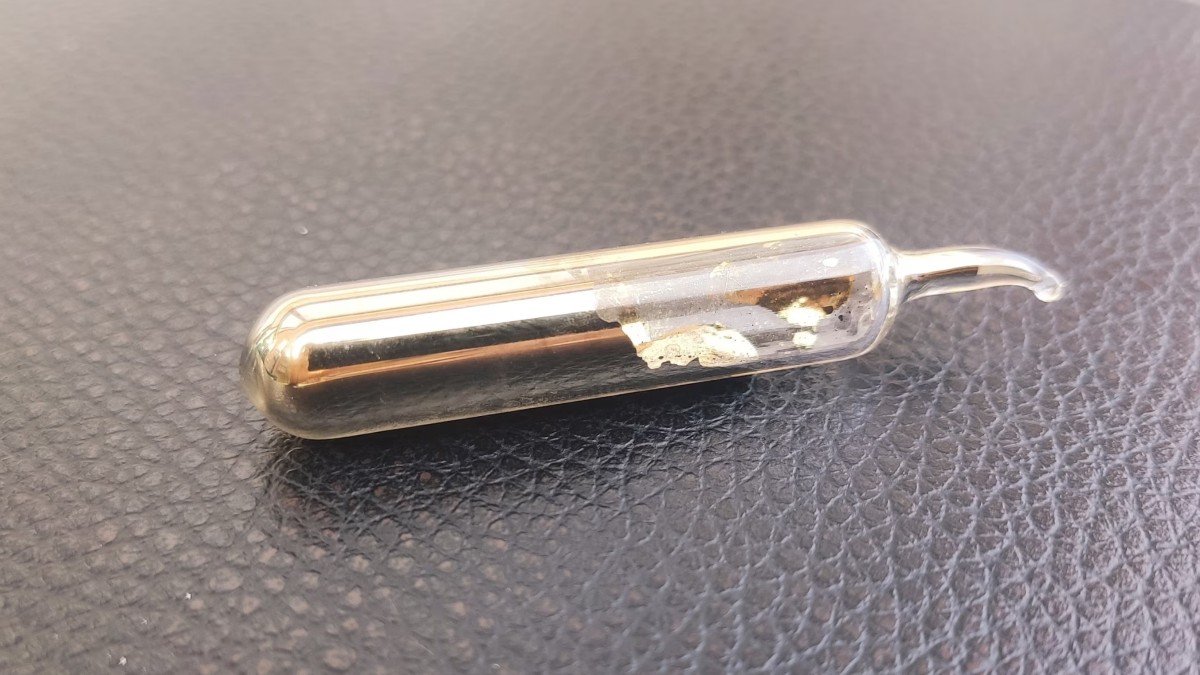
North America’s Only Cesium Project Moves Closer to Production
Power Metals is advancing what it describes as North America’s only cesium project at a time when America’s defense ambitions are colliding with the reality of critical mineral supply chains.
The U.S. imports 100% of its required cesium, a rare mineral used in atomic clocks, GPS systems, aerospace solar technology, advanced communications networks, and high-tech defense equipment.
That could make a high-grade cesium discovery in Ontario a potential source of new North American supply.
And now it’s moved from a discovery story to a development one, as Power Metals (TSXV: PWM; OTC:PWRMF) advances one of the continent’s few cesium-focused projects.
For years, cesium occupied a niche corner of the critical minerals market.
But national security has changed that.
Now, governments are moving to secure supply chains, boosting defense spending and driving up growing demand for advanced communications, aerospace technologies, and next-generation computing infrastructure.
At the same time, the global cesium supply has become even more concentrated.
Only a handful of cesium deposits have ever been mined commercially, and most are either depleted, inactive, or controlled by Chinese interests.
That backdrop helps explain why Power Metals’ Case Lake project has drawn attention.
Located in northeastern Ontario, Case Lake hosts a high-grade cesium resource alongside lithium and tantalum mineralization. The project has already completed extensive drilling, established a maiden resource, and advanced into the permitting process as the company works toward its stated target of early 2027 production.
The opportunity facing the company today looks very different from what it did just a few years ago.
Back then, Case Lake was being explored primarily as a lithium-cesium-tantalum pegmatite system. Drilling eventually confirmed a less common form of mineralization: extensive pollucite mineralization containing high cesium grades reported by the company.
Subsequent drilling at the West Joe dyke returned intervals grading more than 20% cesium oxide, with individual pollucite lenses reaching grades of up to 26% Cs?O.
Those results helped establish Case Lake as a notable cesium discovery in the Western world.
A Different Path to Production
One reason Case Lake has attracted attention is that the path to production appears potentially less complex than many comparable projects.
The cesium mineralization occurs close to the surface, allowing Power Metals (TSXV: PWM; OTC:PWRMF) to pursue a quarry-style operation rather than a large-scale underground mine.
The company has outlined a development plan centered on crushing and sorting ore on site before shipping concentrate to customers.
That approach reduces both capital requirements and operational complexity compared with many critical minerals projects currently competing for financing and permits. The company says this approach may also reduce environmental impacts by limiting the operational footprint.
Rather than pursuing a large-scale mining operation from the outset, Power Metals is advancing a staged approach designed to bring an initial cesium operation into production while exploration continues across the broader property.
According to the company, the initial operation will focus on extracting high-grade pollucite while continuing to expand the broader resource through ongoing exploration.
Power Metals’ strategy reflects the way the Case Lake deposit has evolved.
“We’re taking advantage of the way this deposit occurs. The cesium mineralization is close to the surface, which allows us to pursue a quarry-style operation and a staged development approach. We don’t need a large processing facility to produce concentrate, and that gives us a potential path to production with lower capital requirements and less complexity than many critical mineral projects,” said Johnathan More, Chairman of Power Metals.
The current resource is centered on the West Joe dyke, but it represents only a small portion of the broader project, which spans approximately 11,000 hectares and hosts multiple lithium-cesium-tantalum pegmatite targets.
More than 24,000 metres of drilling have been completed across the property, and the company continues to identify additional exploration targets beyond the existing resource footprint.
In other words, the objective is to establish production first, potentially generate cash flow, and continue expanding the project as additional targets are drilled and evaluated.
The company is currently advancing environmental studies, permitting, and stakeholder engagement activities as it works toward a production decision.
Unlike lithium, copper, or rare earths, cesium is not a market with dozens of producers competing for market share.
Commercial production has historically come from only a handful of deposits worldwide, making it one of the most concentrated supply chains in the critical minerals sector.
For years, the market was dominated by three mines: Tanco in Canada, Bikita in Zimbabwe, and Sinclair in Australia. Today, Sinclair is inactive, Bikita remains under Chinese control and facing a battle to send raw materials out of Zimbabwe at present, and Tanco has largely shifted to recovering lower-grade material from existing stockpiles and historical workings.
That has left the global cesium market relatively tight, and that scarcity is reflected in pricing.
While cesium markets remain largely opaque, certain cesium compounds have traded at prices exceeding US$200,000 per tonne, according to data compiled by Shanghai Metals Market.
The structure of the industry is equally unusual.
The industry’s concentration can be seen in the companies that have historically dominated it. Sinomine controls the Tanco mine in Manitoba, one of the world’s best-known cesium deposits, while Albemarle remains one of the few Western companies with decades of experience producing cesium chemicals and specialty products.
That explains why Albemarle’s relationship with Power Metals (TSXV: PWM; OTC:PWRMF) has attracted attention.
The company holds the cesium offtake associated with Case Lake and has provided a US$5 million prepayment to support development. More recently, former Albemarle exploration executive Eric Schrimsher joined Power Metals’ Cesium Advisory Committee, adding another layer of industry expertise to the project.
The involvement of established industry participants has contributed to market interest in the project.
Albemarle (NYSE: ALB) provides the clearest large-cap connection to Case Lake. The U.S. specialty chemicals producer is one of the few Western companies with decades of experience in the cesium business, holds the project’s cesium offtake, and has provided a US$5 million prepayment to support development. If Power Metals reaches production, that relationship could give Albemarle access to a new North American source at a time when global cesium supply remains highly concentrated.
The strategic importance extends much further downstream. Cesium’s use in atomic clocks, GPS and advanced communications makes secure supply relevant to major aerospace and defense companies such as Lockheed Martin (NYSE: LMT), which builds GPS satellites for the U.S. Space Force, and RTX (NYSE: RTX), whose businesses span missile defense, radar, communications and advanced aerospace systems. Neither company is identified as a direct Case Lake customer, but both illustrate the enormous strategic industries that ultimately depend on resilient Western critical-mineral supply chains.
As Power Metals advances Case Lake toward production, it is doing so with a project that occupies a distinctive position in the market: what it describes as North America’s only cesium project, backed by one of the few companies in the world with decades of experience in the cesium business.
Commercial cesium production has historically been limited to a small number of producers.
Today, the number of active sources appears to have narrowed.
“There is currently no operating source of high-grade cesium production anywhere in the world,” said Haydn Daxter, CEO of Power Metals.
That is the backdrop against which Case Lake is advancing.
If the company succeeds, North America would gain a potential new source of cesium supply at a time when governments, defense contractors, and technology companies are searching for secure access to critical minerals.
By. Tom Kool
IMPORTANT NOTICE AND DISCLAIMER
Forward-Looking Information
This article contains forward-looking statements and forward-looking information within the meaning of applicable securities laws. Forward-looking statements include statements regarding Power Metals Corp.’s business plans, the Case Lake project, exploration and development activities, permitting, environmental studies, stakeholder engagement, potential quarry-style operations, potential production, production timing, concentrate shipments, offtake arrangements, prepayments, market demand, critical mineral supply chains, pricing, strategic importance, and future growth or opportunities.
Forward-looking statements are based on expectations, assumptions, estimates, and opinions as of the date of publication and are subject to known and unknown risks, uncertainties, and other factors that may cause actual results or events to differ materially from those expressed or implied. Readers are cautioned not to place undue reliance on forward-looking statements. No obligation is undertaken to update or revise any forward-looking statements, except as required by applicable law.
The responses attributed to interview participants reflect their views and opinions only, speak only as of the date made, and should not be interpreted as statements of fact, guarantees, or commitments.
Nature of the Content
This article is provided for general informational purposes only. It does not constitute investment advice, investment research, a recommendation, or an offer or solicitation to buy or sell any securities in any jurisdiction. The author and the publisher are not registered as investment advisors, broker-dealers, or securities analysts in any jurisdiction.
The article is based on publicly available information believed to be reliable; however, no representation or warranty is made as to the accuracy, completeness, or timeliness of such information. Readers should conduct their own independent due diligence and consult with a qualified investment professional before making any investment decision.
Summaries and commentary regarding other companies operating in related industries are included solely for general informational and comparative purposes and should not be considered exhaustive, predictive, or indicative of future performance.
Mining and Technical Information
Scientific and technical information concerning mineral projects referenced in this article has been derived from publicly available information, including disclosure made by the relevant issuers. The author and publisher are not qualified persons under National Instrument 43-101 - Standards of Disclosure for Mineral Projects and have not independently verified the scientific or technical information described in this article.
This article is not a technical report under National Instrument 43-101 and should not be relied upon as a technical or economic assessment of any mineral project. Readers should review the applicable issuer’s technical reports, news releases, continuous disclosure filings and other public disclosure, and should consult qualified professional advisers where appropriate.
Share Ownership and Potential Conflicts of Interest
The author, publisher and/or their affiliates may own or acquire securities of Power Metals Corp. or other companies referenced in this article and may therefore have a financial interest in the performance of such securities. Any such interests should be considered when evaluating the views expressed.
Neither the author nor the publisher has been paid by the company that is the subject of the article to prepare or publish this article. However, the author and/or the publisher may, in the future, enter into commercial, consulting, advertising, investor relations, or other business arrangements with one or more companies referenced herein, which may include compensation.
The author and/or affiliated entities may buy or sell securities of the companies referenced at any time, including before or after publication of this article, and have no obligation to disclose any such transactions. Readers should consider these interests when evaluating the views expressed.
Risk Disclosure
Investing in securities involves risk, including the risk of loss of all or a substantial portion of an investment. Past performance is not indicative of future results. No representation is made regarding the future price or performance of any securities referenced in this article.
No Reliance